


Designing the handover from the AI bot to a human agent in WhatsApp customer service
In most WhatsApp customer service projects, the focus is initially on the bot: how well does it recognise enquiries, how many intents does it cover, and what is its containment rate? These are valid questions, but they do not determine whether the service will ultimately be perceived as good. The real moment of truth comes later — precisely when the AI recognises an enquiry it cannot resolve itself and hands the matter over to a human.
If this handover takes place without any context, the customer has to explain their issue all over again, and this is precisely where their perception can quickly turn negative. In customer service, having to repeat the problem when switching to an agent has been one of the biggest sources of frustration for years. That is why the most important design work lies not only in the bot itself, but above all in the moment when it hands over the conversation cleanly and completely.
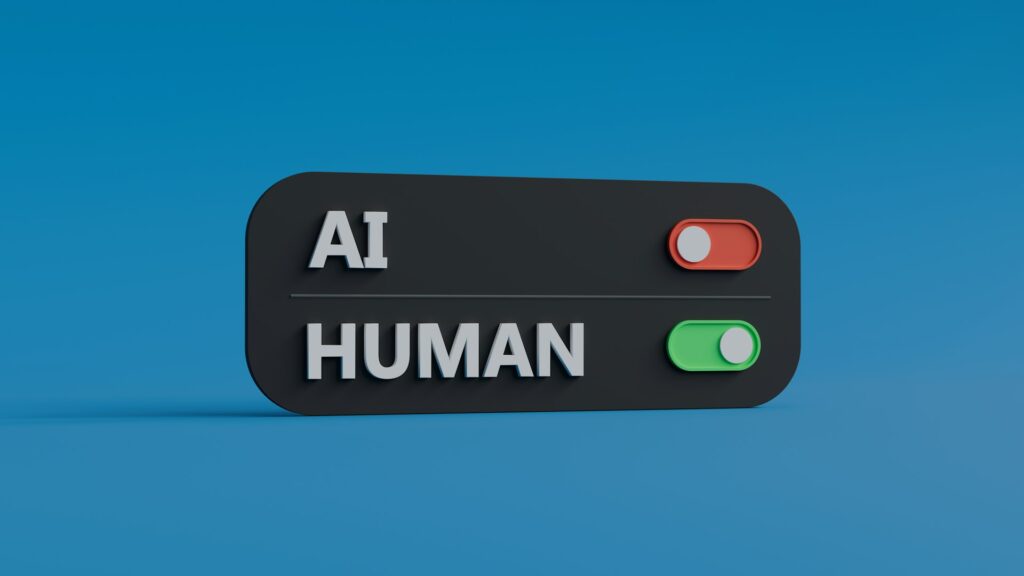
The moment of escalation: when a human should take over
The most common misconception is that AI should remain in the conversation for as long as possible. In practice, the opposite is often true: if a system spends too long trying to resolve an enquiry that falls outside its remit, the quality of service suffers far more than it would with a swift and smooth handover.
There are four clear signs that a handover should take place immediately. Firstly, when the enquiry is emotionally charged — for example, in the case of complaints, verbal abuse, personal crises or health-related concerns. In such cases, a human voice matters more than accurate information. Secondly, when the matter is legally or financially binding, such as contract amendments, refunds, claims for damages or sensitive customer data. For reasons of liability and trust, these matters belong in the hands of a human agent.
Thirdly, the handover should take place when the AI falls below its confidence threshold and can only respond with a low degree of certainty. In such cases, a clear handover is preferable to a risky attempt at an unreliable solution. Fourthly, the same applies when customers explicitly ask to speak to a human agent. Even if the AI might technically still be able to resolve the issue, this request takes precedence over any containment statistics. Anyone who embeds these signals properly within the system creates an escalation logic that works in day-to-day operations — and avoids precisely the friction that would otherwise prove costly later on.
How to ensure a smooth handover without customers having to repeat themselves
The operational quality of a handover can be measured by a single question: does the employee take over the conversation in the very next sentence, or do they ask once again, ‘How can I help you?’ It is precisely this moment that determines whether the handover is experienced as genuine service or as a disruption.
To ensure a smooth handover, three pieces of information must be available at the agent’s workstation at the same time. Firstly, the full conversation — not just the last sentence, but the entire thread, ideally supplemented by a brief two- or three-line summary. Secondly, the customer data from the CRM or service system, automatically linked via a telephone number or other identification logic, including name, case history, contract status, open tickets and loyalty status. Thirdly, the enquiry in a classified format, so that the recognised intent is immediately visible and the conversation is routed to the correct skills group.
If these three elements are seamlessly integrated, when the agent opens the conversation, they do not simply see a message, but a query complete with context, profile and recommended action. The human task is then reduced to what people do particularly well: contextualising, articulating and maintaining the relationship. For the customer, the transition remains virtually invisible — without any artificial announcement, without a break in tone and without the need to explain everything all over again.

The most common mistakes in the handover between AI and the service team
Using the wrong tool and lacking context
In practice, four recurring mistakes can be observed, which almost every project goes through at least once before the setup is properly in place. The first is using the wrong tool for the handover: the AI runs in a vendor console, whilst the service team works in Zendesk, Salesforce or Freshdesk. When switching, a second window opens, the conversation is only partially transferred, and the agent ends up clicking back and forth between two interfaces. The second mistake is a lack of context. The AI hands over the case, but without profile enrichment. The agent sees only a message, doesn’t know who wrote it, searches the CRM, may find something, and then begins with a generic greeting. It is precisely this gap that gives customers the impression that the company doesn’t really know them.
Escalating too late
A third common mistake is setting the escalation threshold too high. The bot then spends far too long trying to provide an answer that it cannot actually give properly. At the latest after the second follow-up question in an unclear context, it should escalate rather than continue to improvise. If you don’t clearly define this limit, you risk exactly the sort of conversations that later end up in reviews or on social media — where they cause far more damage than an early handover.
Failing to prepare the team
The fourth mistake is failing to prepare the team for the new way of working. Staff who have been handling emails for years need a different rhythm when they suddenly start engaging in WhatsApp conversations. Responses need to be shorter, appear quicker and be more clearly structured. Without training, replies can quickly sound unnatural or too cumbersome, and customers pick up on this straight away. Effective handover therefore works not only technically but also organisationally — only when the team has mastered the channel does the service feel seamless.
The framework for a service that operates automatically but remains human
From the points described, a simple framework can be derived that works across all sectors in DACH projects.
The first building block is a clearly defined escalation logic. An A4 sheet should set out which intents the AI handles autonomously, which it escalates immediately, and which it only passes on with a low confidence threshold. This document serves as the common basis for service management, IT, data protection and sales — and prevents actual conflicts from only becoming apparent once the system is live.
The second building block is structured handover. The conversation history, a brief summary, the customer profile, the classified intent and a suggested next response should all be consolidated in a single interface and automatically available. The third building block is tone alignment: when AI and staff speak in the same brand voice, the transition feels much more natural, as there is no stylistic break – a trait that otherwise makes bots easily recognisable.
The fourth component is ongoing evaluation. Which escalations were justified, which came too early, and which too late? It is precisely these insights that should be incorporated weekly into the fine-tuning of intent scope, confidence thresholds and routing logic. A setup that still looks exactly the same after three months as it did on the first day has, as a rule, already drifted away from reality. Memacon builds WhatsApp service setups for companies in the DACH region precisely according to this model: with a clearly defined AI scope, a structured handover, a brand-consistent voice and ongoing optimisation — GDPR-compliant, on EU infrastructure and typically live within five working days.
Ultimately, the answer to the opening question is simple: a service feels human when the machine steps aside at the right moment and a human takes over at the right moment. Everything else is, above all, a matter of thorough preparation.

Ready for a handover that doesn’t feel like a handover?
When escalation logic, context handover and tone work together seamlessly, the result is a service that feels smooth and natural to customers — even when the interaction switches between AI and a human agent behind the scenes. This is precisely what sets a technical solution apart from a genuine customer experience: The handover remains invisible, the response remains personal, and the service never loses its thread. This is particularly valuable for businesses because smooth handovers not only boost satisfaction but also reduce internal friction and noticeably ease the burden on teams.
You can read more about the general use of WhatsApp in a business context in our main article “WhatsApp for Businesses”. There, we show how WhatsApp can be strategically integrated as a service channel and what role automation can usefully play in this, without losing the personal touch. It is precisely the interplay between bots, service processes and human intervention that determines whether a channel merely functions or is genuinely perceived as a high-quality part of the customer experience.
Book a 30-minute initial consultation with Memacon®
Frequently Asked Questions
Why is handing AI over to humans the real moment of truth?
Weil sich hier entscheidet, ob Kund:innen den Service als flüssig oder als Bruch erleben. Studien zeigen seit Jahren, dass das Wiederholen des Anliegens beim Wechsel zum Agenten zu den größten Frustfaktoren im Kundenservice zählt. Deshalb ist die Übergabe wichtiger als jede Containment-Zahl.
When should an AI hand the conversation over to a human?
In the case of emotionally charged matters such as complaints or health-related issues, in the case of legally or financially binding processes, where the confidence threshold is low, and where there is an explicit request for human interaction. These four indicators should be firmly embedded in the escalation logic.
What information do staff need to ensure a smooth handover?
The full conversation history, including a brief summary, the relevant customer data from the CRM, and the classified intent with its routing destination. This enables the team to pick up where they left off in their next message without having to ask the customer about their enquiry again.
What does a good handover feel like for customers?
Almost imperceptible. Without any artificial introduction, without a break in the flow of conversation, and without repeating the request. The next sentence follows quickly, is personalised, and is relevant to the context. It is precisely this seamless experience that is the most powerful driver of satisfaction in AI-powered service.
What are the most common mistakes made during the handover between AI and humans?
Handover via the wrong tool, a lack of context when opening the conversation, an escalation threshold set too late, and inadequate preparation by the service team. These four patterns occur at least once in almost every project and can be avoided with a clear architecture.
How should the service team be prepared for WhatsApp conversations?
Through targeted training that teaches the different rhythm of messaging apps. Replies are shorter, more dialogue-oriented and quicker than with traditional emails. Without this preparation, responses come across as unnatural and clunky, which customers pick up on straight away.
What does a framework for a personalised AI service look like?
It consists of four key components: a clearly defined scope of intent; a structured handover with full context; a brand-consistent tone of voice between AI and human agents; and a weekly review of escalations, confidence thresholds and routing logic.